Mastic looks like ordinary decorator's caulk. It is not.
It is an acrylic sealant with an intumescent filler. When a fire heats it, it swells and fills the gap.
What it is used for
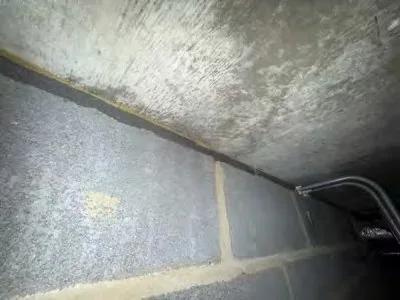
Joints between a wall and a slab.
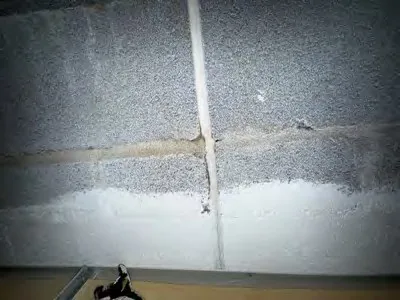
The vertical joint where two block walls meet. The photo on this page shows one filled.
Small gaps round single cables and thin pipes.
Finishing the edges of other seals, such as the faces of batts or the gap behind a collar.
The head of a partition, where the top track meets the soffit.
What it cannot do
Fill a big hole. Mastic is for narrow gaps. A wide opening needs batts, board or mortar, with mastic only on the face.
Cope with a lot of movement. Some joints open and close as a building moves. A joint like that needs a product tested to take movement, not one that cracks.
Replace a collar on a plastic pipe. The two do different jobs.
How it is applied
The gap is cleaned and any loose material taken out. A backing material goes in, if the detail needs it, so the mastic has the right depth. Then the mastic is run in and tooled flat.
Depth and width both matter. A thin skin over a deep hole is not a seal.
Temperature can matter too. Some mastics should not be applied in the cold, and the data sheet says so. The same data sheet says whether it can be painted over.
Records
Each run of mastic gets a label and a photo. The record says the product, the length and the position.
Our BM TRADA / FIRAS-certificated contractors apply it to the manufacturer's tested detail.
Questions we get asked
Can I use silicone from the hardware shop?
No. Ordinary silicone has not been tested for fire. Use a product that has been tested for the job.
How long does mastic last?
It depends on the product and where it is. A ceiling void is usually kind to it. Wet areas and outdoor joints are harder.
Send it over with the postcode. We will tell you what the work involves and roughly what it costs.
Get a price